
Training
Build Expertise in Corrosion, Reliability, and Asset Integrity

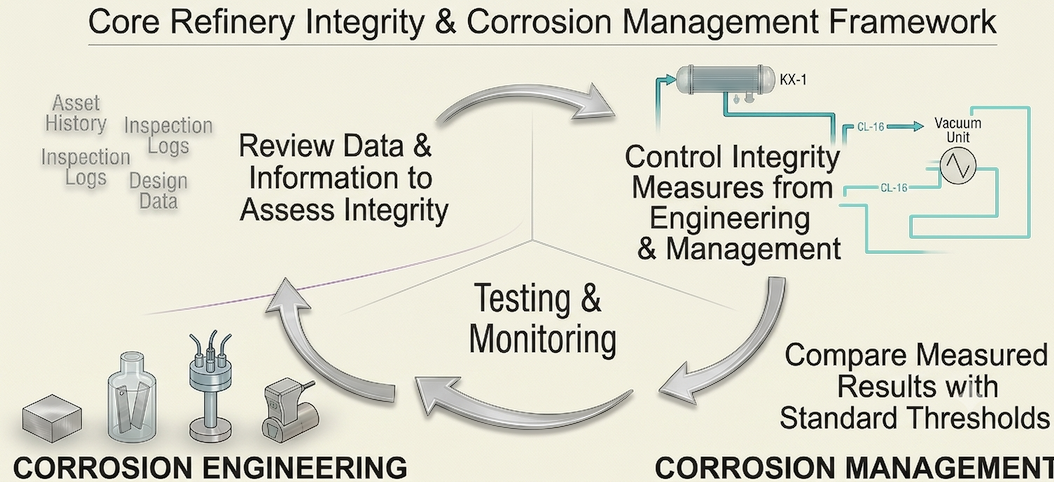
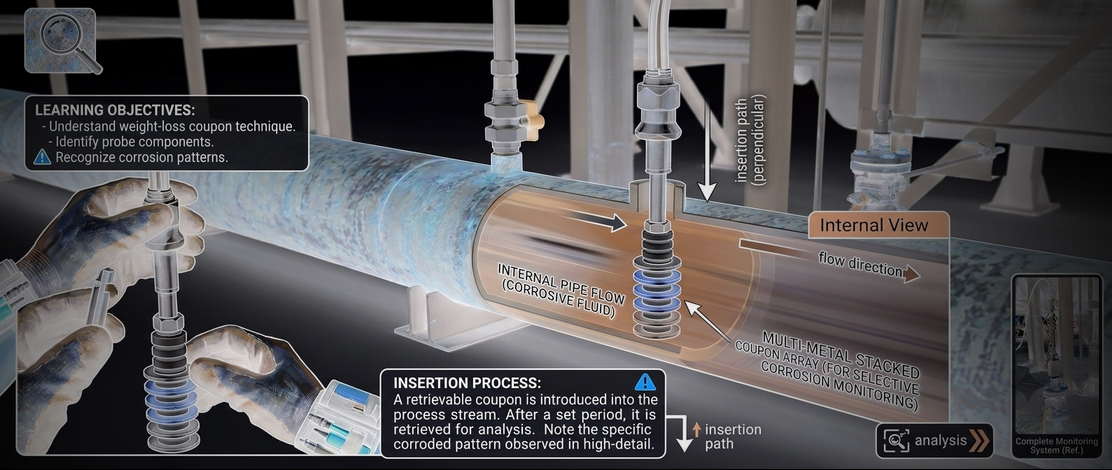
Build Competence in Refinery Corrosion
What You’ll Learn
Our program bridges the gap between engineering theory and refinery operations, equipping participants with practical knowledge to identify, assess, and mitigate corrosion challenges affecting reliability and asset performance.
Example of Core Competencies You Will Build:
Understanding Complex Crude Corrosivity:
Gain a comprehensive understanding of how sulphur, TAN, temperature, flow conditions, and metallurgy interact to influence sulfidation and naphthenic acid corrosion. Learn how to evaluate these factors to support safer operation and optimize material selection for your specific crude slate.
Sour Water Corrosion:
Learn how H2S and NH3 concentrations, process chemistry, operating conditions, and flow characteristics influence corrosion mechanisms, enabling more effective mitigation strategies and improved equipment reliability.
From Theory to Field-Ready Problem Solving:
Bridge the gap between theory and practice by applying a systematic framework to identify corrosion mechanisms, assess degradation risks, and implement practical mitigation strategies for aggressive refinery environments.
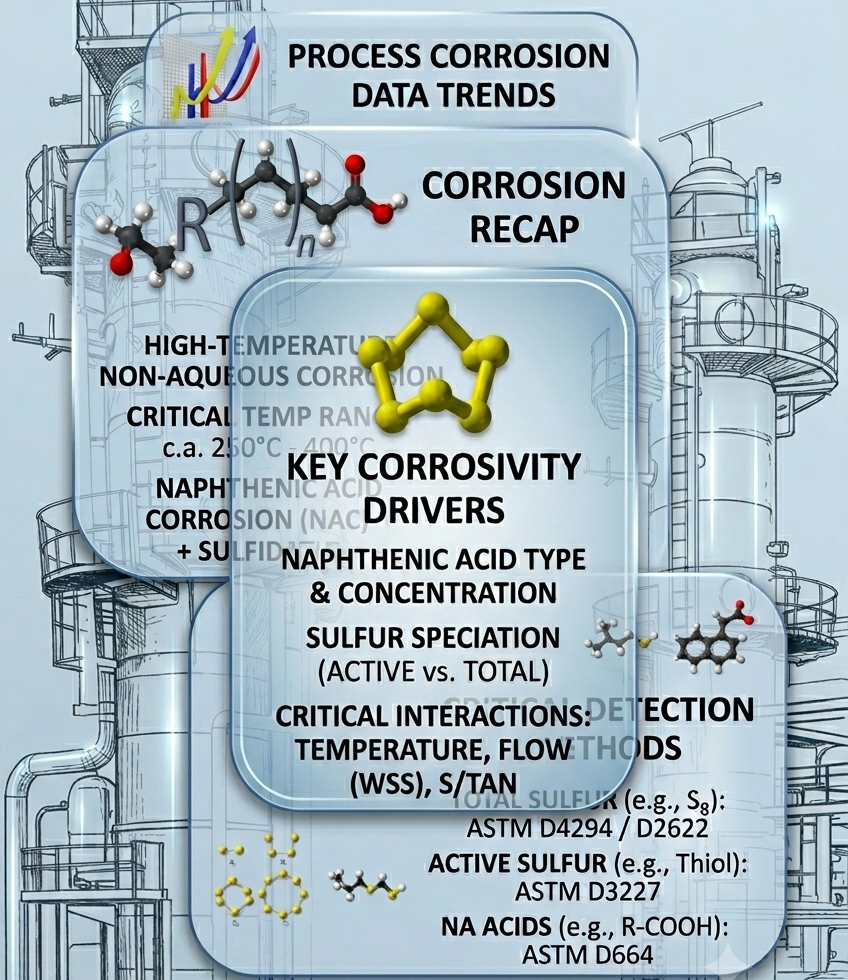
Go Beyond Basic Degradation Forecasts.
1. Transform Data into Decisive Action
Our intelligent risk ranking engine transforms complex integrity data into clear, actionable guideline, enabling organizations to make faster, confident decisions and focus resources where they deliver the greatest value.
2. Uncover the Drivers Behind Risk
By analysing the relationship between Severity, Uncertainty, and Detection, the platform reveals not only where likelihood of failure exists, but why it exists.
3. Optimize Maintenance Investment and Reliability
The result is a more precise and defensible approach to asset integrity management. By identifying the root causes of risk, organizations can prioritize interventions more effectively, reduce unnecessary maintenance expenditure, improve asset reliability, and maximize the return on maintenance investment.
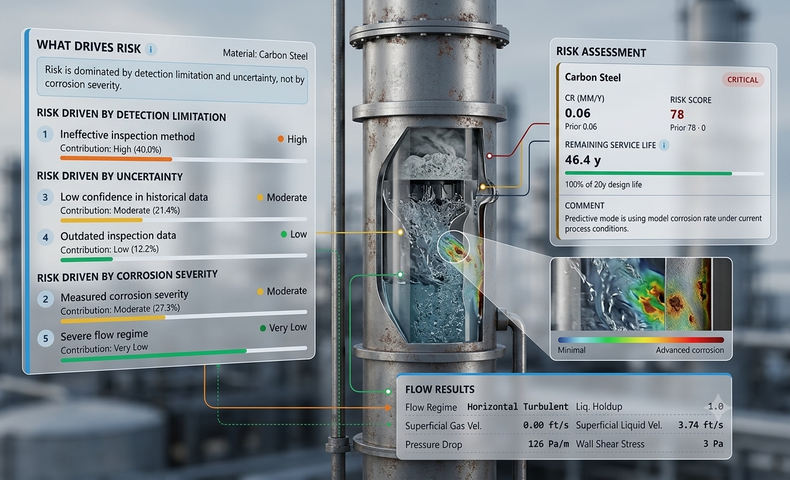
Master Your Operational Integrity.
1. Eliminate Costly Trial-and-Error
Quantify how operating conditions influence corrosion from multiple perspectives instead of relying on iterative testing. Identify key parameters, and reduce degradation risk using multi-variable sensitivity analysis.
2. Maximize Performance Within Safe Operating Limits
Increase throughput without compromising equipment lifespan. Support operational decisions with explicit trade-offs between production efficiency and long-term asset reliability.
3. Improve Reliability Through Informed Operating Practices
Assess how operating conditions contribute to corrosion and degradation mechanisms within real operational constraints. Not all parameters are adjustable, and some changes may increase corrosion risk depending on the system context. The objective is to distinguish beneficial, neutral, and adverse operating adjustments, supporting more informed decisions and reducing avoidable stress on assets.

Master Corrosion Modelling & Monitoring
1. What You’ll Learn
Understand how operating conditions, predictive models, and monitoring data can be combined to improve corrosion assessment and support proactive integrity management.
2. Learning Outcomes
Evaluate Operating Conditions
Learn how pressure, temperature, flow regime, water chemistry, and process variables influence corrosion mechanisms.
Apply Predictive Models
Use engineering models and sensitivity analysis to understand how operating conditions affect corrosion behaviour.
Improve Operational Decision-Making
Interpret modelling results and monitoring data to support informed operating decisions while maintaining safe and reliable asset performance.
IMPORTANT: By subscribing, you agree to our Privacy Policy and Terms & Conditions and consent to receiving email updates. You can unsubscribe at any time.